
Japanese
English
- 有料閲覧
PPV購入案内
1,320円 (1,200円+税10%) こちらは、1885ページから1890ページの文献です。購入には医書.jp本会員登録が必要です。
会員登録完了後に改めて上記「購入サイトへ」を選択してください。
または「購入サイトへ」選択後に「購入ログイン」、「新規会員登録」の順に進んでください。
会員登録について詳しくはをご確認ください。
- Abstract 文献概要
- 1ページ目 Look Inside
- 参考文献 Reference
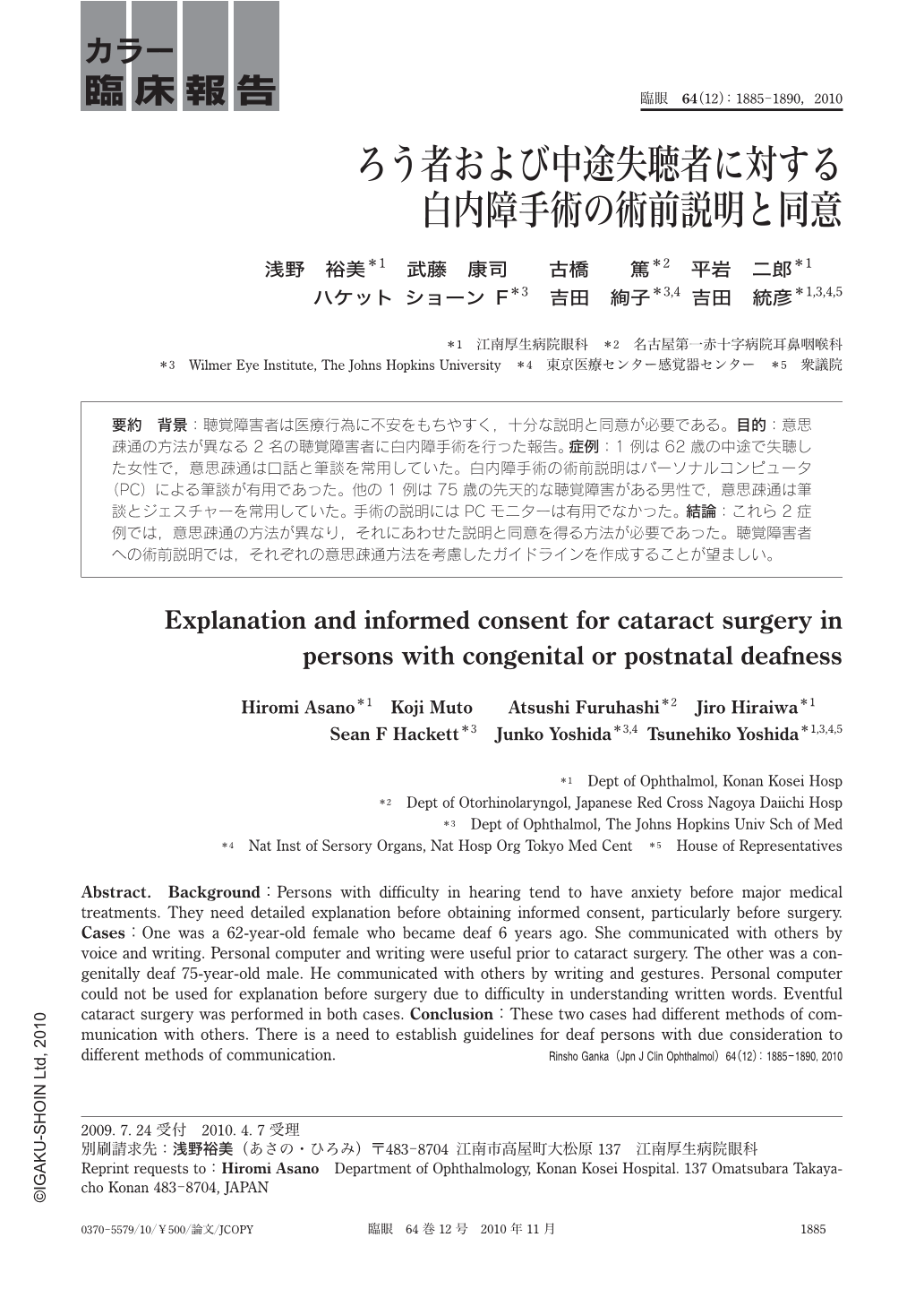
要約 背景:聴覚障害者は医療行為に不安をもちやすく,十分な説明と同意が必要である。目的:意思疎通の方法が異なる2名の聴覚障害者に白内障手術を行った報告。症例:1例は62歳の中途で失聴した女性で,意思疎通は口話と筆談を常用していた。白内障手術の術前説明はパーソナルコンピュータ(PC)による筆談が有用であった。他の1例は75歳の先天的な聴覚障害がある男性で,意思疎通は筆談とジェスチャーを常用していた。手術の説明にはPCモニターは有用でなかった。結論:これら2症例では,意思疎通の方法が異なり,それにあわせた説明と同意を得る方法が必要であった。聴覚障害者への術前説明では,それぞれの意思疎通方法を考慮したガイドラインを作成することが望ましい。
Abstract. Background:Persons with difficulty in hearing tend to have anxiety before major medical treatments. They need detailed explanation before obtaining informed consent,particularly before surgery. Cases:One was a 62-year-old female who became deaf 6 years ago. She communicated with others by voice and writing. Personal computer and writing were useful prior to cataract surgery. The other was a congenitally deaf 75-year-old male. He communicated with others by writing and gestures. Personal computer could not be used for explanation before surgery due to difficulty in understanding written words. Eventful cataract surgery was performed in both cases. Conclusion:These two cases had different methods of communication with others. There is a need to establish guidelines for deaf persons with due consideration to different methods of communication.
Copyright © 2010, Igaku-Shoin Ltd. All rights reserved.

